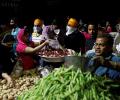
The government of Maharashtra decided to shut operations at APMC Vashi mandi between May 11 and 17 after confirmed cases of Covid-19 surpassed 80 in the APMC and over 450 across Navi Mumbai, where the mandi is located.
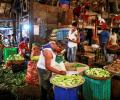
Farmers remained hesitant in sowing vegetable seeds in drought-hit areas.

Price of ladies finger shot up staggering 236% at Vashi wholesale market last month.
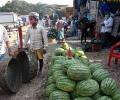
Vashi APMC traders see supplies to Mumbai impacted over movement curbs. A number of trucks sent to Mumbai from the market has reduced from 600 per day in recent times to around 300.
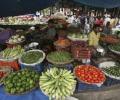
The forecast of deficient monsoon rainfalls scared farmers.

The free education policy should be amended so that boys also get free education besides girls, and all Marathas should get free education "from KG to PG" (kindergarten to post-graduation) until the entire community gets reservation, he said.
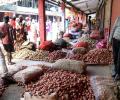
People in the know said plans were afoot to begin the sale of all food grains through online, with a major quantity through auctions that would be later extended to other commodities.
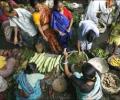
Vegetables account for 5.44 per cent of the Consumer Price Index.

The Agricultural Produce Marketing Committee Act of a state regulates the purchase of agricultural products, such as cereals, pulses, fruits and vegetables for that region. It hobbles farmers, imposing multiple levies on produce and disallows direct sales to private companies.

The benchmark M-30 variety of sugar has declined by over 3 per cent in November to trade now at Rs 3,694 per quintal

A deficient rainfall season starts with heavy showers.
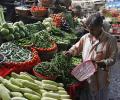
Traders estimate lower vegetable output this year.
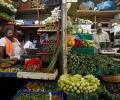
Supply rises as farmers harvest crops amid fear of spoilage on expectations of early showers
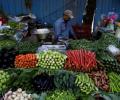
Vegetable arrivals at mandis, especially in Maharashtra, have declined by more than 50 per cent since the beginning of the month.

To tide over the difficulties due to incessant shutdowns, several farmers in Maharashtra have turned into aggregators and started selling their produce without the help of mandis or agents. They have started contracting with bulk consumers like hypermarkets and co-operative housing societies to sell their produce directly.
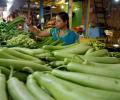
Not only primary vegetables, but also additives like garlic, ginger and chilly have recorded a sharp increase in prices
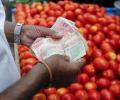
The agriculture ministry projects India's tomato output at 19.69 million tonnes in 2016-17 (July-June)
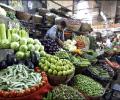
The southwest monsoon season was deficient by 16 per cent.

To restrict onion exports and help cut prices in the domestic market, the government had gradually raised the MEP to $1,150 a tonne from $650 a tonne a few months earlier.

The price of export quality lady's finger, for example, shot up 150 per cent in two weeks to close on Thursday at Rs 40 a kg against Rs 16 a kg on September 16 in the Agricultural Produce Marketing Committee, Vashi, near Mumbai.
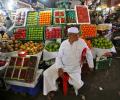
Vegetables and fruits have weights of 1.74 per cent and 2.11 per cent, respectively, in the wholesale price index.
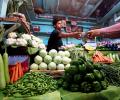
A little away from the city in the northern suburbs, vegetables are 15-30 per cent costlier.
Trade sources believe that tomato supply from Maharashtra has slumped due to incessant rain in the state towards the fag end of the monsoon season, reports Dilip Kumar Jha.

Most key rabi-producing states of north India, such as Madhya Pradesh and Rajasthan, have staggered their procurement to enable farmers to come in batches, so that there is no overcrowding. The Centre has also set up a call centre to coordinate the inter-state movement of farm commodities.
There have been several instances of traders dumping fruits and vegetables outside mandis. Or of farmers dumping produce outside their villages or feeding them to their animals.

The concept of gold as an asset capable of getting anytime money is evaporating.

From farmers to cement, steel, logistics, transportation and automobiles, the back-end is struggling to get going due to the liquidity crisis.
 © 2026 Rediff.com - Advertise with us - Disclaimer - Privacy Policy - Sitemap - Feedback - About us - Terms of use - Grievances